
Karsten’s Search For Justice
The CallerThis flow traces Karsten Sundelin’s transformation from protective anger into a belief that official justice is too slow and inadequate.
increasing Bearing strength in each event
 decreasing
Bearing strength in each eventdecreasingThe Protective Father
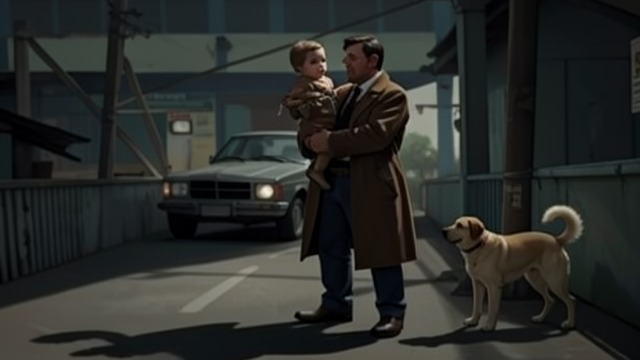
The Protective Father
A threat to his family
Karsten carries Margrete to the hospital and directs Lily to get the car. Once he believes his daughter is safe, anger replaces his initial panic.
A violent promise
He tells Lily that he will tear the perpetrator apart if he catches him. His language presents vengeance as a way to restore the family’s dignity.
The transformation begins as a reaction to helplessness. Karsten cannot undo the violation, so he imagines physical punishment as a form of control.
A Theory Of Immediate Punishment

A Theory Of Immediate Punishment
Justice compared to training
Karsten argues that punishment should follow a crime quickly, using the example of correcting a dog before it forgets what it did. He sees appeals and delays as evidence that formal justice has lost its force.
Lily resists the analogy
Lily argues that people are not dogs and that consequences can matter even when they are not immediate. Their discussion turns their private disagreement into a clash of moral ideas.
Karsten’s theory makes emotional sense to someone who feels the law is too distant. It also risks turning people into objects to be controlled rather than individuals subject to due process.
The New Warrior

The New Warrior
Anger becomes self-image
Karsten thinks of himself as a warrior whose purpose has been awakened by Margrete. He sees his daughter as the key to understanding himself and to protecting his family.
Protection shades into menace
Lily recognizes the devotion in his anger but also fears the evil growing inside the man she married. His protective identity gives him energy while making him harder to reach.
The change does not simply make Karsten stronger. It narrows his identity around the need to confront an enemy.
Bitter Men Meet

Bitter Men Meet
A shared injury
At a petrol station, Karsten meets Schillinger, who fears losing his dogs after Theo’s death. Karsten says his marriage has collapsed and that he is exhausted.
Official process rejected
Schillinger doubts the authorities, and Karsten agrees that they move too slowly. Their conversation becomes an alliance between men who believe they have been denied justice.
The encounter carries Karsten’s anger beyond his own family. He now finds companionship with someone whose grievance may strengthen his desire for action outside the law.
Revenge Without A Verdict
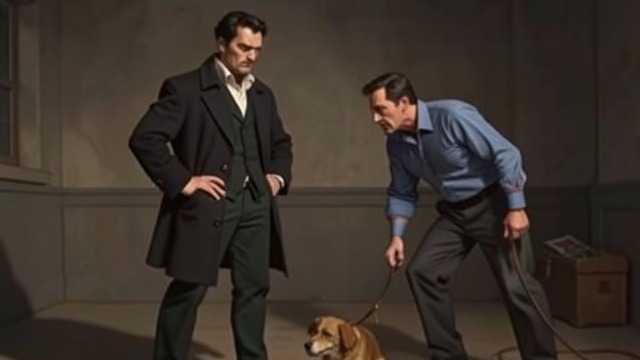
Revenge Without A Verdict
A suspect without proof
The community blames Johnny for many incidents, and Karsten has a strong emotional reason to distrust the process. Yet Johnny’s role in the kennel escape is never established.
The danger of certainty
Karsten’s alignment with Schillinger grows from mutual rage, not from a resolved account of what happened. The possibility of punishment outside formal channels shadows the relationship.
His arc leaves the moral question open: whether a victim’s understandable anger can become another form of injustice when evidence is missing.
immediately after Margrete’s attack
during the weeks after the attack
during Karsten’s later days at home
after Lily leaves with Margrete
near the ending, before Schillinger’s January trial
